


Here is a bitter truth: The startup that wins is rarely the one with the best product. It is the one with the best access. Access to the investor who writes the first check, the customer who signs the first major contract, the mentor who says, “Don’t do that.” That access has a name: Business Networking.
Done right, business networking turns months of cold outreach into a single warm introduction. In this guide, you will learn how business networking helps your startup scale faster, along with a simple playbook you can start today.
Business networking helps startups scale faster by providing trusted access to funding, customers, talent, and partners, which shortens sales cycles and reduces customer acquisition costs.
What is Business Networking and Why Does It Matter for Startups?
Business networking is the practice of intentionally building mutually beneficial professional relationships with people who can help grow your company and whom you can help in return.
This is not about collecting business cards or spamming messages on LinkedIn. It is about building relationships with purpose.
For startups, this matters far more than it does for any established company. A corporation has brand recognition, a large sales force, and a deep budget. You have none of these.
What you have is speed, hustle, and the ability to build genuine trust through one conversation at a time. Smart founders turn this into an unfair advantage.
It also has a compounding effect. One investor introduces you to two more people. One happy customer refers peers. A mentor invites you to a closed-door dinner where you meet your future co-founder. Just like interest in a bank account, the earlier you invest in a professional network, the faster it grows.
How Business Networking Helps Your Startup Scale Faster
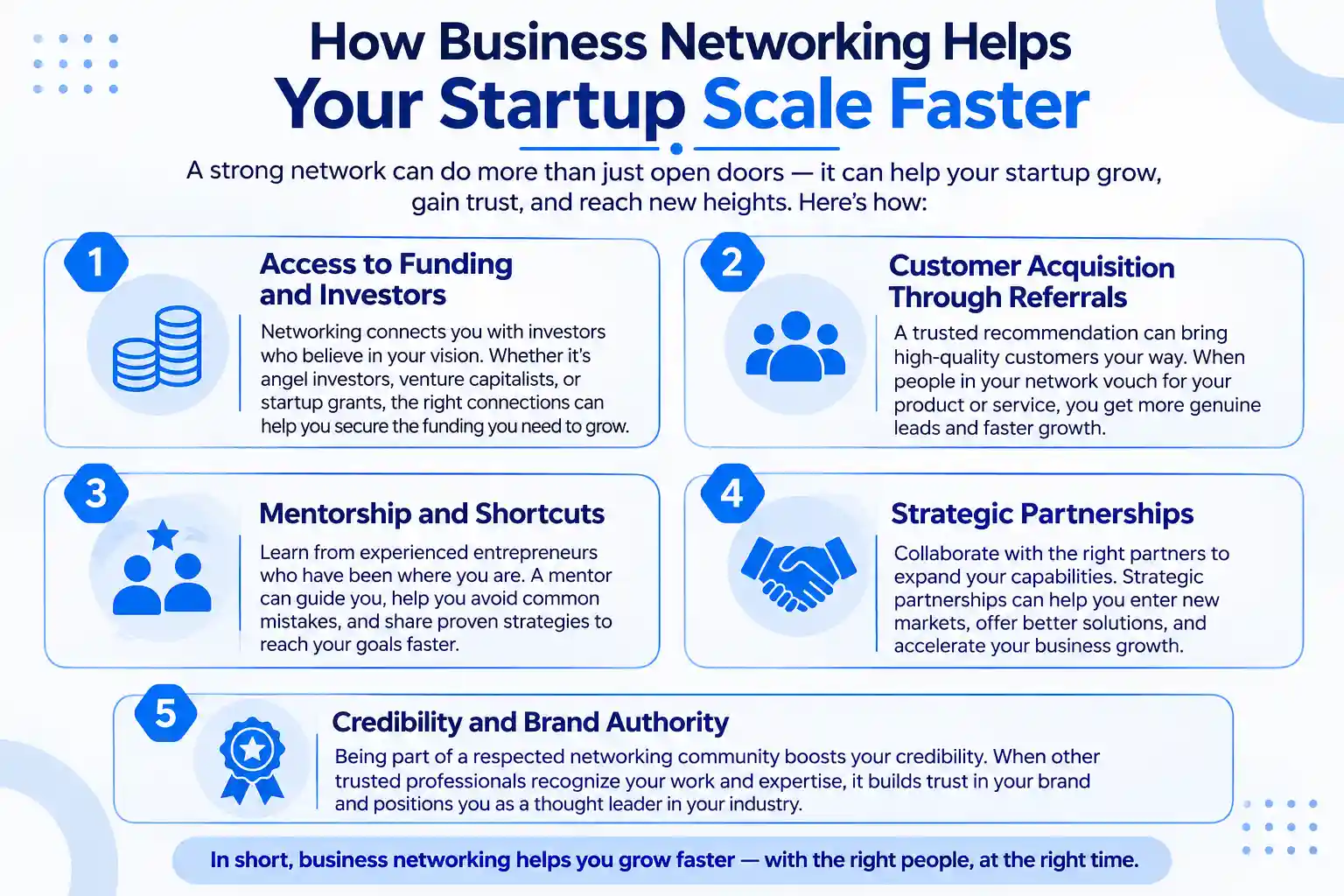
Let’s talk specifics. These 5 benefits are where networking directly translates into growth:
1. Access to Funding and Investors
Investors receive hundreds of pitch decks every month, and the ones that get read usually come through someone they trust. A warm introduction pulls you out of the pile and instantly puts you on the shortlist.
2. Customer Acquisition Through Referrals
A potential customer who hears about you from someone they respect comes with built-in credibility. They convert faster, negotiate less, and stick around longer. Through consistent business networking, you build a circle of people who can confidently recommend you.
3. Mentorship and Shortcuts
Every mistake you are about to make has already been made by someone else. A good mentor can steer you away from a bad pricing model, a toxic hire, or the wrong market, saving you months of trial and error.
4. Strategic Partnerships
A complementary company with an established audience can bundle, integrate, or co-market your product, putting you in front of thousands of qualified buyers without a massive ad budget. These deals almost always start from a relationship
5. Credibility and Brand Authority
When respected people say your name, your credibility rises. A panel slot, a newsletter feature, or an introduction from a famous founder creates social proof that no advertisement can buy. This makes sales calls easier, investor meetings smoother, and PR outreach more effective.
Types of Business Networking Every Founder Should Use
The best approach is a mix of formats that match your personality, budget, and goals:
In-Person Events and Conferences: Conferences, meetups, pitch nights, and demo days build trust the fastest. You can read body language, share meals, and follow up while memories are fresh.
Local founder meetups and chamber events in hubs like Houston or Austin are also great for finding customers and service providers.
Online Networking and Communities: LinkedIn, X (Twitter), and niche Slack or Discord communities let you connect worldwide without leaving your desk. Don’t just be present; be active: leave thoughtful comments, share useful insights, and send personalized connection requests.
Founder, Alumni, and Peer Groups: Accelerators, founder communities, alumni groups, and former peer groups are your warmest leads. Trust already exists, so these relationships convert much faster than with strangers.
A 4-Step Business Networking Strategy for Startups
Networking works best when it is intentional. Use this framework to turn random mingling into a growth engine:
Step 1: Set a Clear Goal: Decide what you want before attending anything: investors, customers, co-founders, or advice. Write down one to three goals for the next 90 days, such as meeting five potential enterprise customers.
Step 2: Find the Right People and Places: Make a list of the people, companies, and communities that can help, then figure out where they spend their time.
Step 3: Lead with Value: The golden rule of business networking is to give before you ask. Share an article, make an introduction, or give honest feedback.
Prepare a ten-second intro without jargon, such as We help restaurants cut food waste by 30 percent, along with two open-ended questions like What is your biggest challenge this quarter?
Step 4: Follow Up Within 48 Hours: Most networking value is lost right here. Within two days, send a personalized note referencing your conversation.
Networking Mistakes That Cost Founders Dearly
Even smart founders sabotage themselves. The biggest mistake is pitching too soon; build rapport first. Another is collecting contacts without following up, which renders a long connection list useless.
Others only network when they are desperate, making relationships feel transactional. Start before you need to. Some founders ignore junior contacts who will become tomorrow’s decision-makers, or remain vague about what they need, leaving people unable to help.
Avoiding these alone can dramatically improve the return on your business networking efforts.
How to Measure the ROI of Business Networking
Relationships feel intangible, but you can measure them. Track leading indicators on a monthly basis: meaningful conversations, follow-up meetings, and introductions given and received.
Then track lagging indicators: referral leads, hires, signed partnerships, initiated funding conversations, and revenue generated from your network. After a quarter, you will see which channels pay off, and you can double down on them.
Conclusion: Build Your Network Before You Need It
Startups run on speed, and speed comes from people. Funding, customers, talent, and partnerships all flow through relationships. Founders who treat business networking as a core growth channel build a compounding advantage that competitors cannot copy.
Start small this week: choose one goal, one community, and one person you would love to meet. Reach out, add value, follow up, and repeat.
FAQs
1. What is business networking?
Business networking is the practice of building mutually beneficial professional relationships with investors, customers, mentors, partners, and peers through events, online platforms, and consistent follow-ups to support your company’s growth.
2. How does business networking help startups grow?
Business networking gives startups access to funding, referrals, talent, mentorship, and partnerships. Trusted relationships shorten sales cycles, lower marketing and hiring costs, and give founders faster market insights.
3. Is online networking as effective as in-person networking?
Both work, and they complement each other. Online networking provides scale and convenience, while in-person meetings build trust faster. Meet online, then deepen the relationship over a call or coffee.
4. How can introverts network effectively?
Focus on small gatherings, one-on-one coffee chats, and online communities. Prepare a few questions in advance and aim for two or three quality conversations rather than walking the entire room.
5. Can business networking help me raise funding?
Yes. Most investors prefer warm introductions over cold pitches. Business networking helps you meet investors, accelerator mentors, and fellow founders who can introduce you to the right investors at the right time.