

Inside the Story
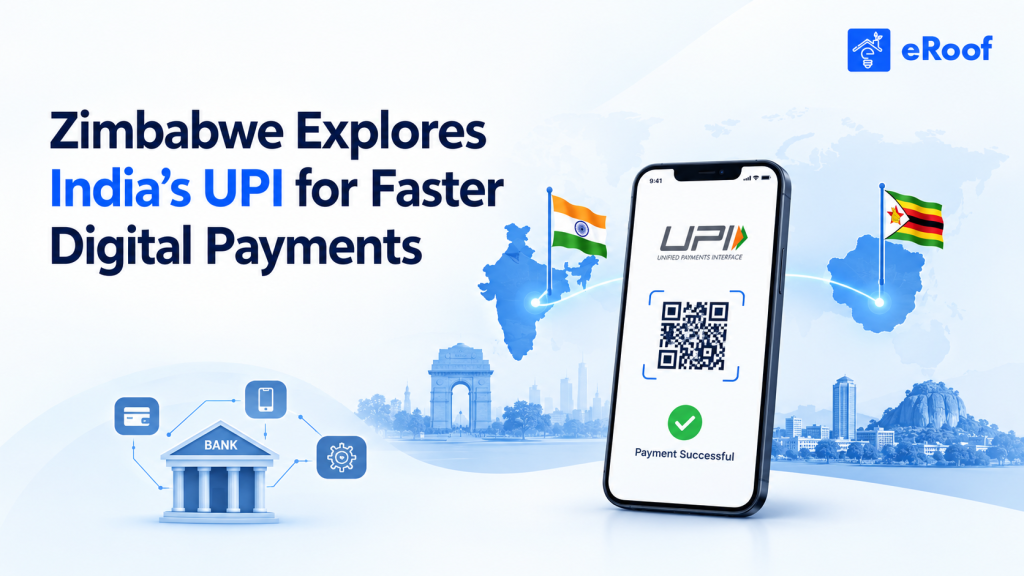
- Zimbabwe is negotiating with NPCI International to use UPI-based payment infrastructure.
- The proposed system could connect banks, fintechs and mobile-money operators in real time.
- Zimbabwe expects faster transactions, lower costs and better support for merchants and SMEs.
- The development highlights India’s growing influence in global digital-payment infrastructure.
The Story
Introduction
Zimbabwe is exploring India’s Unified Payments Interface (UPI) technology as it looks to modernise its domestic digital-payment infrastructure. The Reserve Bank of Zimbabwe is currently in discussions with NPCI International Payments Ltd. (NIPL), the international arm of India’s National Payments Corporation of India (NPCI), over a possible UPI-based real-time payments system. Zimbabwe’s central bank governor, John Mushayavanhu, said negotiations could potentially conclude by October 31, 2026.
The proposed system would create common infrastructure connecting banks, mobile-money operators, fintech companies and other payment providers. Instead of simply allowing Indian travellers to use UPI in Zimbabwe, the plan involves using UPI technology as a foundation for Zimbabwe’s own domestic payment ecosystem.
For Zimbabwe, the objective is to make transactions faster and less expensive while improving interoperability between different financial-service providers. The initiative also reflects a broader trend in which countries are looking at India’s digital public infrastructure as a model for developing scalable real-time payment systems.
Background: How India’s UPI Became a Global Payments Model
UPI was launched in India in 2016 under the regulatory oversight of the Reserve Bank of India. Developed and operated by NPCI, the system allows customers to transfer money directly between bank accounts through participating applications.
Its major strength is interoperability. Users do not necessarily need to know which bank or payment provider the recipient uses. Participating institutions can communicate through a common payments infrastructure, enabling quick account-to-account transactions.
The scale of UPI has grown dramatically. According to NPCI’s official statistics, 752 banks were live on UPI in August 2026, when the system processed approximately 24.51 billion transactions worth ₹29.82 lakh crore.
The Indian government has increasingly positioned UPI as an example of digital public infrastructure that can be adapted for international markets. In August 2026, the government said UPI had completed ten years and was operational in 11 countries for acceptance and/or cross-border remittances.
India’s international payments strategy is also moving beyond simply allowing Indian consumers to pay overseas. NPCI International has been working with foreign payment-system operators to help develop or connect real-time payment infrastructure.
Main Development: Zimbabwe Looks at UPI-Based Infrastructure
The latest Zimbabwe discussions represent another potential step in this international expansion.
Under the proposed arrangement, UPI technology would act as common infrastructure connecting Zimbabwe’s different payment providers. Banks, mobile-money companies and fintech firms could potentially process transactions through an interoperable real-time network.
Zimbabwe’s central bank expects such a system to reduce transaction costs and accelerate payments. Account-to-account transfers could become a cheaper alternative to cards, particularly for lower-value domestic transactions. Banks could also potentially provide payment services to merchants at lower costs.
Another important potential benefit is the development of new financial products. When different providers operate on interoperable infrastructure, fintech companies and banks can build services around a common payments layer instead of creating isolated systems.
For Zimbabwe’s small and medium-sized businesses, improved digital-payment infrastructure could also have wider implications. The country’s central bank expects greater digitisation to provide better visibility into economic activity among SMEs, potentially giving policymakers more reliable information about their contribution to the economy.
Cross-Border Payments Could Come Later
One important distinction is that the immediate proposal is focused on domestic payment infrastructure, rather than automatically introducing UPI-based cross-border payments between India and Zimbabwe.
According to Zimbabwe’s central bank governor, cross-border payments and remittances could potentially be added at a later stage.
This distinction is important because India’s international UPI strategy involves several different models.
In some countries, Indian consumers can use UPI-enabled applications to make merchant payments. In other cases, NPCI International works with local payment authorities to develop or connect instant-payment infrastructure.
For example, NPCI International has partnered with the Bank of Namibia to support development of a UPI-like instant-payment system. India has also continued expanding UPI acceptance and cross-border connectivity in other international markets
More recently, NPCI International entered an agreement with Uzbekistan’s National Interbank Processing Centre to enable Indian travellers to make UPI payments through Uzbekistan’s interoperable UZQR system.
Industry Impact
The Zimbabwe development has implications beyond payments.
For fintech companies, interoperable infrastructure can create opportunities to develop digital wallets, merchant-payment solutions, lending products and other financial services.
For banks, a shared real-time payments network could reduce friction in account-to-account transactions and create opportunities to offer lower-cost services to businesses.
For SMEs, faster and potentially cheaper digital payments could make it easier to accept electronic transactions and participate in the formal digital economy.
For consumers, improved interoperability could reduce the dependence on cash and make everyday payments more convenient.
For India, the development is another example of how domestic digital infrastructure can become a technology-export opportunity. Rather than exporting only a consumer-facing payment application, India can potentially export the underlying infrastructure and expertise that supports real-time payments.
The global relevance of this model is growing. In August 2026, the Indian government said UPI had processed more than 24,162 crore transactions during FY2025-26, with transaction value reaching around ₹314 lakh crore
The internationalisation of UPI is also supported by efforts to make cross-border transactions easier. In June 2026, JPMorgan Payments and NPCI announced a collaboration aimed at enabling real-time foreign-exchange conversion and settlement for cross-border UPI transactions.
What It Means for Businesses
The potential Zimbabwe-UPI partnership illustrates an important shift in the global payments industry: digital payment infrastructure is increasingly becoming part of national economic infrastructure.
For entrepreneurs and businesses, interoperability can matter as much as payment speed. A system that allows banks, fintechs and mobile-money providers to communicate can reduce fragmentation and potentially make it easier for businesses to reach customers using different payment channels.
For India, meanwhile, UPI’s international expansion strengthens the country’s position as a developer of digital public infrastructure. If more countries adopt UPI-inspired systems, Indian technology companies, fintech firms and payment specialists could find new opportunities in international financial infrastructure.
However, the Zimbabwe arrangement is not yet a completed deal or operational UPI launch. Current reporting says negotiations are ongoing, with October 31 mentioned as a possible date for concluding the talks. The final terms, implementation timeline, costs and exact technical structure would depend on the outcome of those negotiations.
Conclusion
Zimbabwe’s discussions with NPCI International represent another potential milestone in the global expansion of India’s digital-payment technology. The proposed UPI-based infrastructure could connect banks, fintechs and mobile-money operators through a common real-time system, with the potential to reduce transaction costs and improve payment speed.
For India, the development demonstrates how UPI has evolved from a domestic payment platform into a broader digital-infrastructure model with international applications. For Zimbabwe, it could provide an opportunity to modernise its payment ecosystem and create new possibilities for businesses, fintechs and consumers.
If negotiations result in an agreement, the next challenge will be implementation—ensuring that banks, fintechs, merchants and consumers can adopt the system effectively and that the promised benefits of lower costs, interoperability and faster payments reach the wider economy.