

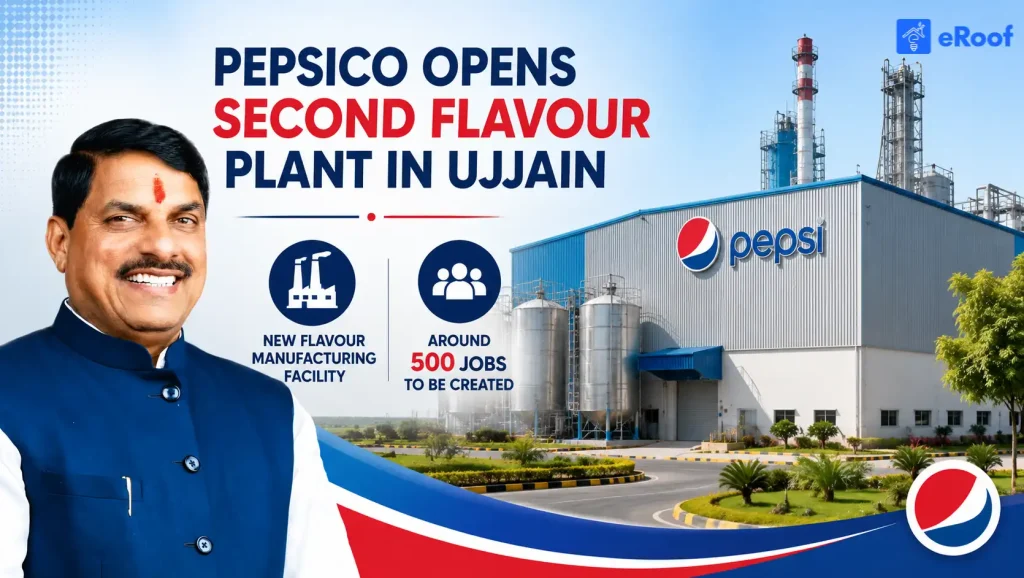
Inside the News
- PepsiCo has inaugurated its second flavour manufacturing facility in Ujjain, Madhya Pradesh.
- The new plant is expected to generate around 500 direct and indirect jobs.
- The investment aims to strengthen PepsiCo’s food and beverage supply chain in India.
- The facility will manufacture flavour ingredients used across PepsiCo’s snack and beverage portfolio.
- The project supports the company’s long-term expansion strategy in India.
- Madhya Pradesh continues to attract major investments in food processing and manufacturing.
- The new unit is expected to improve production efficiency and reduce logistics costs.
PepsiCo Expands Manufacturing with Second Flavour Facility in Ujjain, Madhya Pradesh
PepsiCo has inaugurated its second flavour manufacturing facility in Ujjain, Madhya Pradesh. The investment marks another important milestone in the company’s manufacturing expansion across India.
The new facility strengthens PepsiCo’s production capabilities and supports the country’s rapidly growing food processing sector. It also reflects the company’s long-term commitment to manufacturing in India.
The project is expected to create around 500 direct and indirect employment opportunities. In addition, it will strengthen PepsiCo’s domestic supply chain for flavour ingredients used in its snacks and beverage business.
Strengthening PepsiCo's Manufacturing Network
The Ujjain facility is an important part of PepsiCo’s long-term growth strategy. The company continues to invest in manufacturing capacity to meet rising consumer demand across India.
India has become one of PepsiCo’s fastest-growing markets. Increasing urbanization, changing food habits, and rising demand for packaged products continue to drive this growth.
The new plant will manufacture specialized flavour formulations used in various food and beverage products. Producing these ingredients locally will improve operational efficiency and reduce transportation costs.
The investment will also strengthen PepsiCo’s supply chain resilience. Local manufacturing allows the company to respond more quickly to changing market demand while improving production flexibility.
Supporting India's Manufacturing Vision
The investment aligns with India’s goal of becoming a global manufacturing hub. It also supports national initiatives such as Make in India, which encourage domestic manufacturing and industrial development.
Both central and state governments continue to attract industrial investments by improving infrastructure, logistics, and policy support. These efforts have encouraged multinational companies to expand their manufacturing operations in India.
Madhya Pradesh has emerged as one of India’s preferred investment destinations. Its strategic location, agricultural resources, industrial parks, and strong road connectivity make the state attractive for food processing companies.
The inauguration ceremony was attended by senior government officials and PepsiCo executives. Their participation highlighted the strong collaboration between industry and government in promoting manufacturing growth and employment generation.
Benefits for the Food Processing Industry
Industry experts believe investments like this strengthen India’s domestic value chain. They also reduce dependence on imported ingredients and improve overall production efficiency.
Local manufacturing enables companies to launch new products faster and respond quickly to changing consumer preferences. It also improves product availability across different regions.
PepsiCo has steadily expanded its presence in India over the past three decades. Along with its beverage business, the company has built a strong portfolio of snack brands, including Lay’s, Kurkure, Doritos, Uncle Chipps, and Quaker.
The company continues investing in modern manufacturing facilities to support future growth. These investments reinforce PepsiCo’s confidence in India’s expanding consumer market.
Sustainability and Future Growth
The new flavour manufacturing facility also supports PepsiCo’s sustainability goals. Local production helps optimize transportation routes and improves manufacturing efficiency.
Modern production facilities increasingly use energy-efficient technologies, water conservation systems, and waste reduction practices. These initiatives help lower the environmental impact of manufacturing operations.
The expansion comes at a time when India’s processed food market continues to grow rapidly. Rising disposable incomes, urbanization, and changing lifestyles are increasing demand for packaged food and beverages across the country.
Employment and Economic Impact
Employment generation remains one of the project’s biggest benefits. The facility is expected to create jobs across manufacturing, engineering, quality control, logistics, maintenance, administration, and support services.
Beyond direct employment, the project will benefit suppliers, transport companies, packaging businesses, and agricultural partners connected to the food processing ecosystem.
Industry analysts expect multinational food companies to continue expanding manufacturing operations in India. Strong domestic demand and growing export opportunities continue to attract new investments.
Why the Ujjain Facility Matters
For Madhya Pradesh, the project further strengthens the state’s reputation as an industrial investment destination. Over the past few years, the state has attracted investments across automobiles, pharmaceuticals, renewable energy, logistics, and food processing.
Consumers may not notice immediate changes in PepsiCo’s products. However, the new facility will strengthen backend manufacturing operations. Increased production capacity can improve product availability, accelerate innovation, and maintain supply consistency across the company’s distribution network.
PepsiCo’s continued investment reflects its confidence in India’s long-term growth potential. The Ujjain facility represents another important step toward building a stronger, more localized, and future-ready supply chain.
As the company expands its manufacturing footprint, the investment will contribute to employment generation, industrial development, and sustainable economic growth. It also reinforces India’s position as a preferred destination for global food manufacturing investments.
Understanding the Terms
Flavour Manufacturing: The production of specialized flavour ingredients used in food and beverage products.
Supply Chain: The complete network involved in sourcing, manufacturing, transporting, and delivering products.
Food Processing: The transformation of agricultural products into packaged food and beverage items.
Manufacturing Facility: An industrial plant where products or components are produced.
Industrial Ecosystem: A network of industries, suppliers, infrastructure, and skilled workers that supports manufacturing.
Value Chain: The series of activities involved in creating a product, from raw materials to the final consumer.
Employment Generation: The creation of direct and indirect job opportunities through new business investments.
I wasn’t able to generate the image due to an error on my side.