

Inside the News
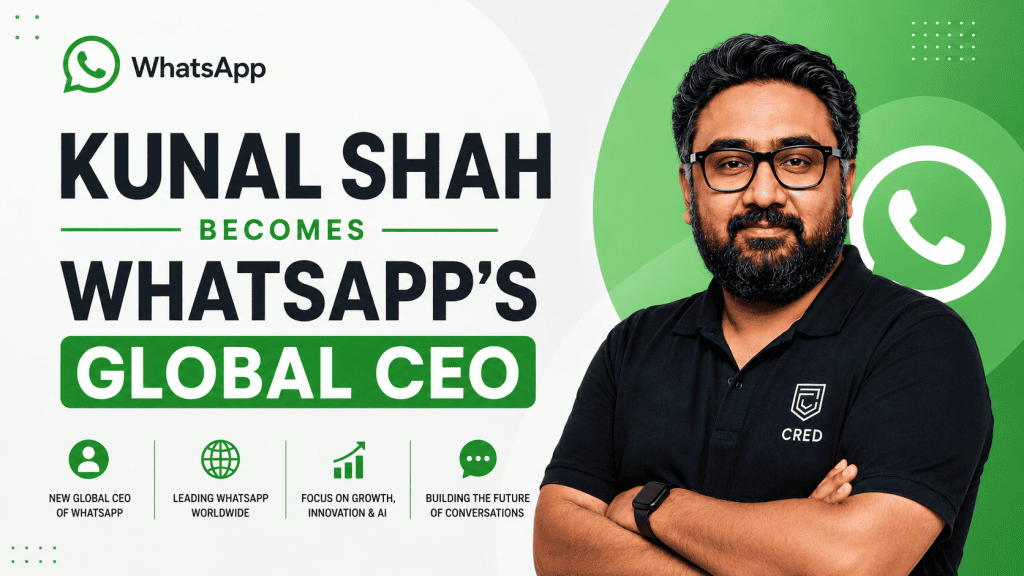
CRED founder Kunal Shah has been appointed as WhatsApp’s new Global CEO by Meta.
He succeeds longtime WhatsApp chief Will Cathcart.
The appointment marks a major milestone for India’s startup ecosystem and global tech leadership.
WhatsApp is expected to accelerate its focus on AI, business messaging, and digital payments.
(Under 160 characters if used as a meta description: “CRED founder Kunal Shah becomes WhatsApp’s Global CEO as Meta bets on India-led innovation, AI, business messaging, and digital payments.”)
Kunal Shah Appointed Global CEO of WhatsApp
Meta has appointed Kunal Shah, founder of fintech unicorn CRED, as the new Global CEO of WhatsApp. The appointment makes him one of the few Indian entrepreneurs to lead a technology platform used by more than 3 billion people worldwide.
The leadership change follows the departure of longtime WhatsApp chief Will Cathcart, who stepped down after serving the company for several years. As a result, Kunal Shah will now lead one of the world’s largest messaging platforms.
The appointment marks a significant milestone for both Shah’s entrepreneurial journey and India’s growing influence in the global technology industry.
Kunal Shah's Entrepreneurial Journey
Kunal Shah first gained recognition by building FreeCharge, one of India’s earliest digital payment platforms. Later, Snapdeal acquired the company, strengthening his position in India’s startup ecosystem.
In 2018, Shah founded CRED, a fintech platform that rewards users for paying credit card bills on time. Since then, the company has expanded into lending, insurance, wealth management, and digital payment services.
Furthermore, CRED has become one of India’s most recognized fintech brands under Shah’s leadership. His focus on product innovation and customer experience has helped the company build a loyal user base.
What Does This Mean for WhatsApp?
Meta’s decision to appoint Shah comes at a crucial time for WhatsApp. The platform is rapidly expanding beyond private messaging into business messaging, digital payments, artificial intelligence, and e-commerce.
Additionally, India remains WhatsApp’s largest market with more than 500 million users. This makes the country central to Meta’s long-term growth strategy.
Industry experts believe Shah’s experience in fintech and consumer technology could accelerate WhatsApp’s ambitions in digital payments and business services.
Meta's Investment in CRED
The leadership announcement coincided with Meta’s decision to invest $900 million in CRED, valuing the company at approximately $4.5 billion.
Meanwhile, Shah will step away from his day-to-day responsibilities at CRED while retaining his personal shareholding in the company.
Miten Sampat, who has led strategy and finance at CRED since 2020, has been appointed Interim CEO to oversee the company’s operations during the transition.
Future Outlook
For India’s startup ecosystem, Shah’s appointment represents another important milestone. It demonstrates that Indian entrepreneurs are increasingly being trusted to lead global technology companies.
Moreover, the technology industry will closely watch how Shah shapes WhatsApp’s future. His experience in fintech, artificial intelligence, and digital payments could help Meta expand the platform’s ecosystem beyond messaging.
Overall, the appointment highlights India’s growing reputation for producing world-class technology leaders while reinforcing Meta’s commitment to innovation and long-term growth.
Understanding the Terms
Global CEO: The highest executive responsible for overseeing a company’s strategy, products, and operations worldwide.
Business Messaging: Tools that enable businesses to communicate with customers through chat, notifications, support, and transactions.
Digital Payments: Electronic transfer of money through apps and online platforms without using cash.
Artificial Intelligence (AI): Technology that enables software to perform tasks that normally require human intelligence, such as understanding language and generating responses.
Minority Stake: Ownership in a company that is less than 50%, meaning the investor does not have full control over operations.