

Inside the News
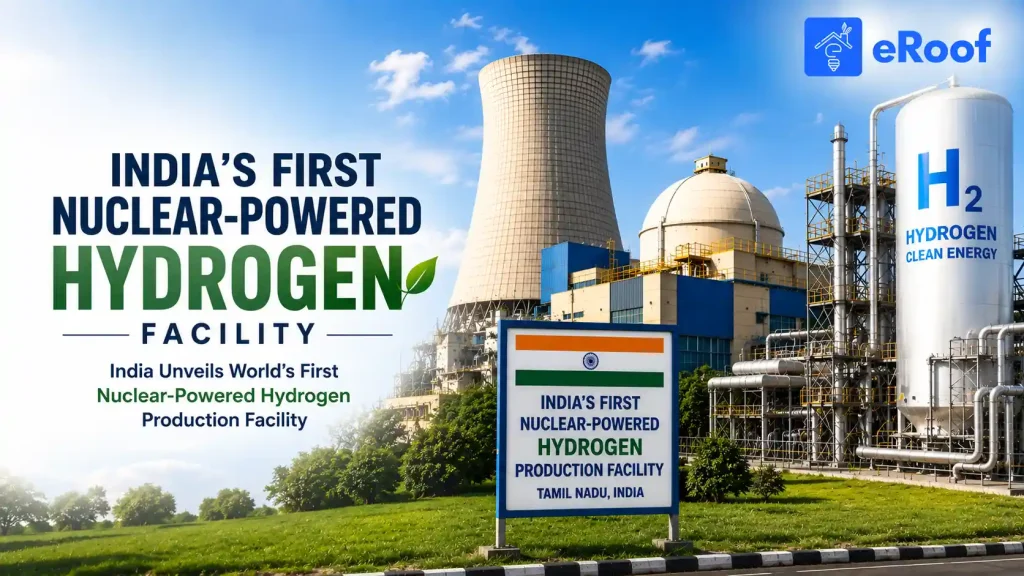
🔹 India has unveiled the world’s first nuclear-powered hydrogen production facility in Tamil Nadu.
🔹 The facility uses nuclear energy to produce hydrogen, supporting India’s clean energy and decarbonization goals.
🔹 The project strengthens India’s National Green Hydrogen Mission and long-term energy security.
🔹 The initiative positions India as a global leader in next-generation hydrogen production and sustainable energy innovation.
India's First Nuclear-Powered Hydrogen Facility
India has achieved a major milestone in clean energy innovation by unveiling the world’s first nuclear-powered hydrogen production facility in Tamil Nadu. The project combines nuclear energy with hydrogen production technology, marking an important step toward sustainable fuel development.
The newly commissioned facility uses electricity generated by nuclear reactors to produce hydrogen through electrolysis. As a result, it can generate low-carbon hydrogen continuously without relying on fossil fuels.
Unlike solar and wind energy, nuclear power provides a stable electricity supply throughout the day. Therefore, the facility can produce hydrogen consistently regardless of weather conditions.
How the Facility Will Support Clean Energy
The project is a key part of India’s National Green Hydrogen Mission, which aims to make the country a global hub for hydrogen production, utilization, and exports.
Additionally, hydrogen has the potential to transform industries that are difficult to decarbonize, including steel manufacturing, fertilizer production, chemicals, shipping, aviation, and heavy transportation.
Since hydrogen produces little or no carbon emissions at the point of use, it is becoming an important clean fuel for the future.
Benefits of Nuclear-Powered Hydrogen Production
The integration of nuclear power with hydrogen production offers several strategic advantages. Nuclear plants operate around the clock, providing a reliable electricity supply for continuous hydrogen production.
Furthermore, this approach improves plant efficiency while reducing dependence on coal, oil, and natural gas. It also strengthens India’s energy security by lowering reliance on imported fossil fuels.
As global demand for clean fuels continues to increase, domestic hydrogen production could support industrial growth and create new export opportunities.
Future Outlook for India's Hydrogen Mission
Experts believe the project highlights India’s growing technological capabilities in advanced energy systems. Moreover, it reflects the country’s commitment to balancing economic growth with environmental sustainability.
Tamil Nadu has emerged as an important destination for renewable and clean energy investments. Meanwhile, the new facility is expected to attract additional investments in hydrogen infrastructure, research, and advanced manufacturing.
Globally, several countries are investing heavily in hydrogen technologies to achieve net-zero emissions. Consequently, India’s successful deployment of a nuclear-powered hydrogen facility strengthens its position as a global leader in clean energy innovation.
Overall, the project demonstrates how advanced nuclear technology can support hydrogen production while building a reliable, scalable, and low-carbon energy ecosystem for future generations.
Understanding the Terms
Green Hydrogen: Hydrogen produced using clean energy sources with little or no carbon emissions during production.
Nuclear Power: Electricity generated through nuclear fission, providing a stable source of low-carbon energy.
Electrolysis: A process that uses electricity to split water into hydrogen and oxygen.
Net Zero: Achieving a balance between greenhouse gases emitted and those removed from the atmosphere.
Energy Security: A country’s ability to ensure a stable, reliable, and affordable supply of energy for its citizens and industries.
National Green Hydrogen Mission: India’s initiative to promote large-scale production, use, and export of clean hydrogen while supporting its climate and energy goals.