


Most founders don’t fail because their idea was bad. Instead, they fail because they run out of money, momentum, or people who believe in them.However what nobody tells you: the solution to all three is often found in one room full of the right humans.
And that room is an entrepreneur meetup. While you tweak your landing page for the tenth time, other founders are trading introductions, hiring their first developer, and landing warm investor intros over cheap coffee.
What Are Entrepreneur Meetups (and Why Do They Work?)
Entrepreneur meetups are organized gatherings where founders and investors meet to swap ideas, solve problems, and build relationships. Some meetups are eight people around a coffee table, while others are 300-person startup mixers with a stage and a playlist.
Think of it as a gym for your business brain. You can read about lifting weights alone, but results show up when you train beside people who push you.
Why Smart Founders Never Skip Entrepreneur Meetups
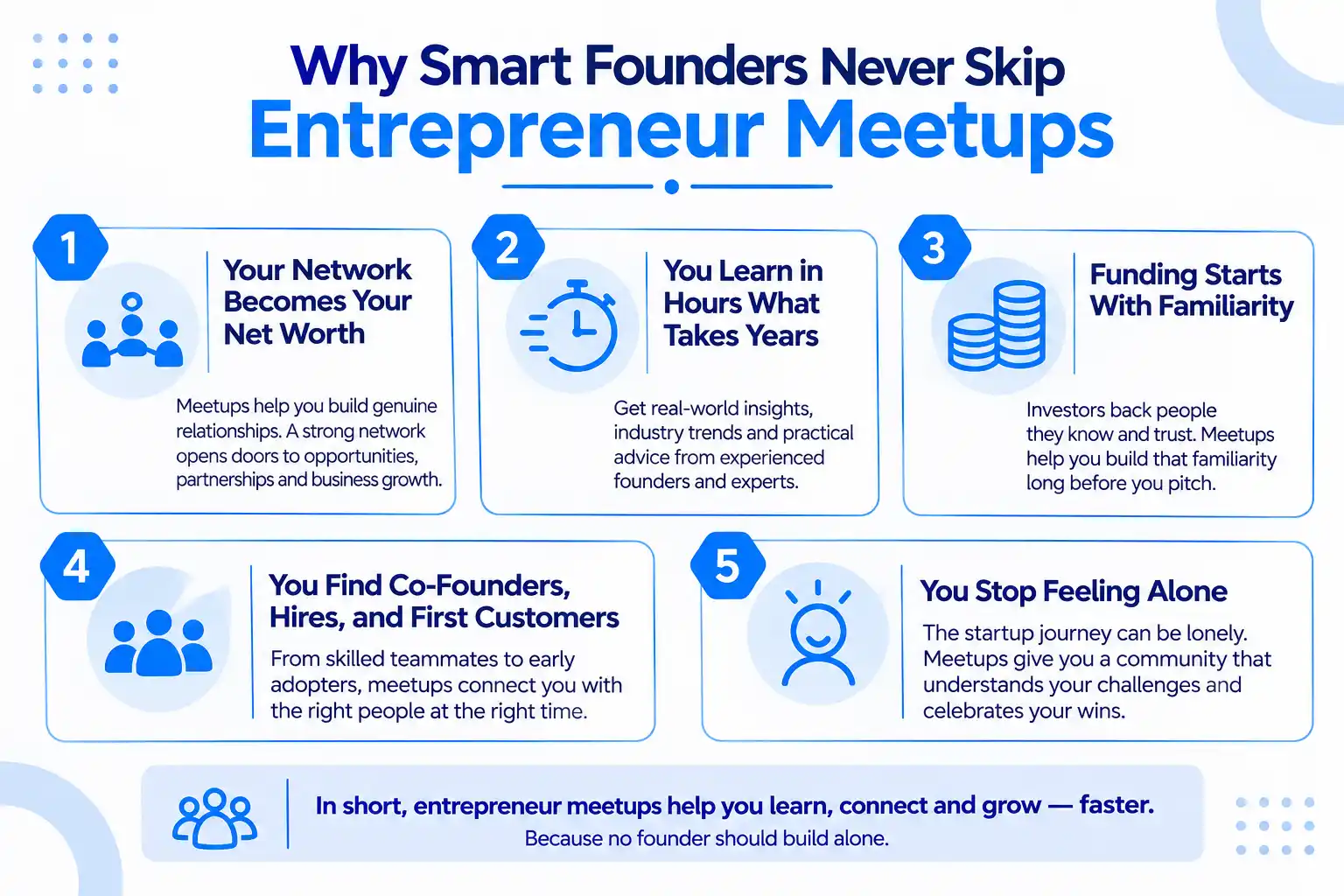
Here is what consistent attendees quietly gain over everyone else:
1. Building Meaningful Connections Through Meetups
Cold emails get ignored. On the other hand, warm introductions get answered.“ A founder you’ve met three times at a monthly event will vouch for you in ways a LinkedIn message never can.
Sociologists call acquaintances outside your close circle “weak ties.” These are often the source of new clients, jobs, and opportunities because they know things your inner circle doesn’t.
2. Learning From Experienced Founders and Entrepreneurs
For example a course teaches theory. A founder two years ahead of you teaches reality: which pricing page converted, which hire was a mistake, which payment processor froze funds without warning.
That is peer mentorship, and it is brutally practical. Every failure you hear about over coffee is one you don’t have to fund yourself.
3. Discovering New Business and Funding Opportunities
After all investors rarely back strangers. Many angels and scouts attend local events precisely to meet promising founders in a relaxed setting. Don’t pitch them at the snack table. Therefore build familiarity first and then ask for a proper meeting later.
Even when no investor is in the room, fellow founders can introduce you to their backers, accelerators, and grant programs.
4. You Find Co-Founders, Hires, and First Customers
The right co-founder doubles your odds. Conversely the wrong one ends your company. Specifically, at a meetup, you can watch how someone thinks, disagrees, and handles pressure before any equity changes hands.
People who attend startup events tend to be curious and comfortable with uncertainty; early teams need people exactly like this. And yes, customers show up too: a B2B founder who is simply helpful in conversation often walks out with a first paying client
5. You Stop Feeling Alone
Founder loneliness is real, and almost nobody talks about it. Burnout, self-doubt, and decision fatigue come with the territory. Hearing “me too” from someone surviving their own rough quarter is surprisingly powerful.
In addition many groups also form accountability circles where members commit to goals and check in regularly, and that structure alone can restart a stalled project.
How to Get the Most Out of Entrepreneur Meetups
However showing up is only half the job. The founders who win treat every event with intention.
How to Prepare Before Attending an Entrepreneur Meetup
Pick one clear goal: meet two potential advisors, find a designer, or test your pitch. Prepare a 20-second introduction in plain language, not buzzwords.
Networking Strategies to Follow During the Event
Arrive early, when the room is small, and conversations start easily. Ask open questions like “What are you working on right now?” or “What’s your biggest challenge this quarter?” Curiosity beats self-promotion every time. Aim for a few deep conversations rather than ten shallow ones, and jot notes on your phone afterward.
How to Build Lasting Connections After the Event
This is where most people fail. Within 48 hours, send a short, personal follow-up that mentions something specific from your chat. Connect on LinkedIn, share a useful resource, and suggest coffee.
Three Mistakes That Waste Your Time
- Pitching too hard.
- Only taking and never giving back.
- Attending once before quitting.
Ultimately trust takes repeated exposure, so give a group at least five or six visits before judging it.
Final Thoughts: Your Next Big Break Is One Conversation Away
Startups reward speed, insight, and resilience, and entrepreneur meetups build all three. They shorten your learning curve, widen your circle, and remind you that you’re not building alone.
Ultimately smart founders don’t wait until they’re desperate for help or funding. They show up early, give generously, and let compounding relationships do the heavy lifting.
FAQ
1. How Do Entrepreneur Meetups Help Startup Founders Grow?
Entrepreneur meetups help startup founders connect with mentors, investors, potential customers, and experienced business owners. They provide networking opportunities, practical business insights, and valuable connections that support startup growth.
2. What Are the Benefits of Attending Entrepreneur Meetups?
The key benefits include building professional networks, finding potential co-founders, discovering funding opportunities, learning from experienced entrepreneurs, generating leads, and getting support from fellow founders.
3. Can Entrepreneur Meetups Help Startups Find Investors?
Yes. Entrepreneur meetups provide opportunities to interact with angel investors, venture capitalists, and startup mentors. Building genuine relationships at these events can lead to warm introductions, funding discussions, and investment opportunities.
4. Are Entrepreneur Meetups Useful for First-Time Founders?
Absolutely. First-time founders can learn from experienced entrepreneurs, avoid common business mistakes, find mentors, explore startup resources, and connect with people who understand their challenges.
5. Are Online Entrepreneur Meetups as Effective as In-Person Events?
Both formats offer valuable networking opportunities. In-person meetups help build personal connections and trust, while online events provide flexibility and access to global startup communities. Combining both can deliver better networking results.